Newborn care guide: fast answers for the first 3 months
Built on official guidance. Each recommendation links to its source.
AAP · NHS · NICE · CDC · WHO. These organisations have not reviewed our guides, and we are not affiliated with or endorsed by them.
No guide matches that yet. Try another word, or browse the topics below.

Feeding
 How much should a newborn eat?Day-by-day amounts, in ml and oz
 Baby hunger cuesEarly hunger signs, late signs and full signs
 Breastfeeding latch and positionsA deep, comfortable latch in 6 steps
 How to make formula safelyWater, scoops and how long a bottle keeps
 Breast milk storageRoom, fridge, freezer, thawed: how long
 Spit-up and burpingNormal spit-up vs. signs to call
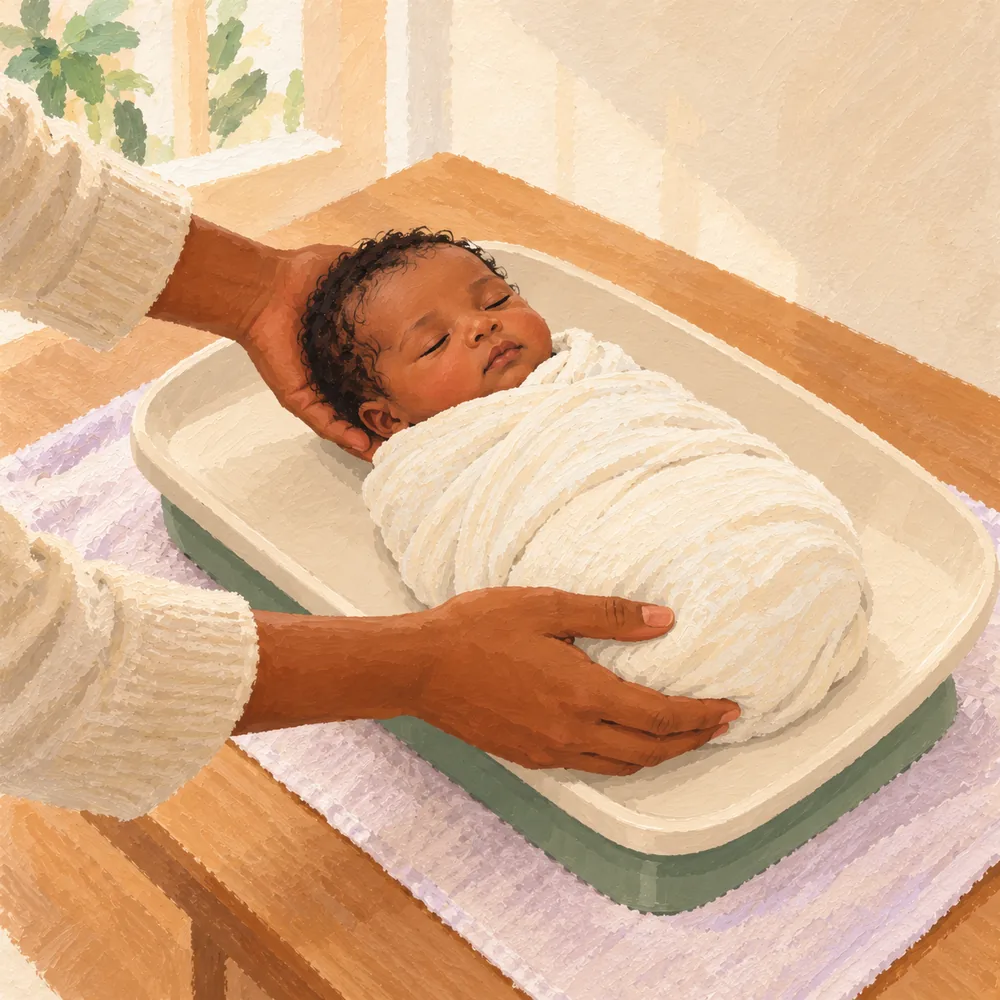 Newborn weight lossWhat is normal, and 8% and 10% of birth weight
Diapers, skin and body
 How many diapers should a newborn have?Wet and dirty diapers by day, poop colors
 Diaper rashWhat helps, and when to call the doctor
 Newborn jaundiceYellow skin day by day, and when to worry
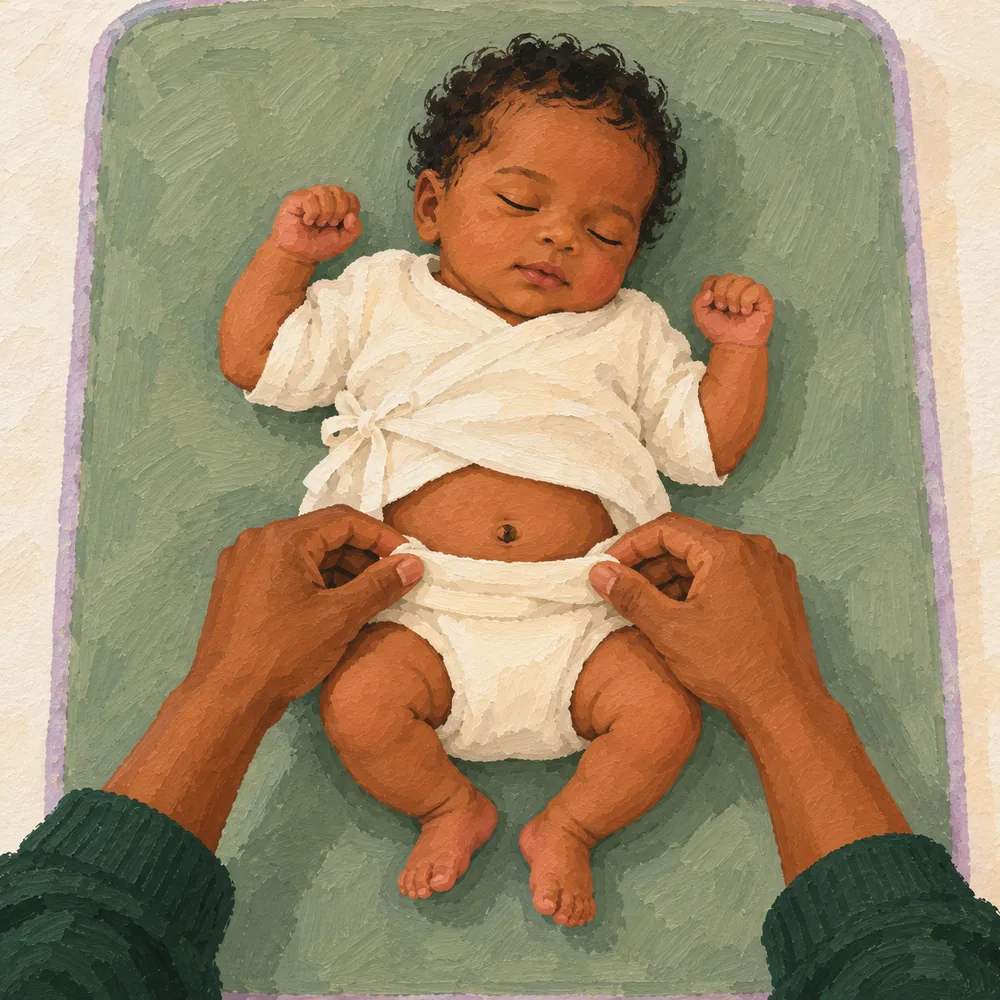 Umbilical cord careCleaning, falling off, infection signs
- Baby growth percentilesWhere your baby's weight sits on the WHO chart
Sleep and crying
 How much should a newborn sleep?Hours by age and a safe sleep check
 Crying baby: how to sootheA calm-down checklist and colic
Health worries
 Baby stuffy nose and coldsSaline, suction and when to call
 Baby fever: when to callWhen a temperature means call now
 Is this normal for a newborn?Sneezing, grunting, spots: normal or not
Everyday care and play
 How to bathe a newbornStep by step, with water temperature
 Tummy time by ageMinutes by age, positions and a timer
For you

Emergency signs: when to get help now
- is struggling to breathe, grunting with every breath, or is not breathing normally; do not wait to time a pause (short pauses under 10 seconds in sleep, with normal colour, are normal)[7, 8, 9]
- has blue, grey, pale or blotchy skin, lips or tongue[1]
- has swollen lips, tongue or throat and trouble swallowing[16]
- is floppy, not responding like usual, not feeding, very hard to wake, or more sleepy than usual[1]
- has a weak, high-pitched or continuous cry, or a cry that does not sound like their normal cry[17, 16, 1]
- has a high temperature and is extremely agitated, cannot stop crying, or seems confused[2]
- has a seizure (fit)[1, 2]
- has a bulging soft spot on top of their head, or a stiff neck[18, 2]
- has a rash that does not fade when you press a glass against it[1, 2, 4]
- is under 3 months old with a temperature of 38°C or higher, even if they seem well: go to the emergency department now (call if your baby looks unwell or you cannot get there safely; in the UK, after the 8- or 12-week vaccines, see the fever guide)[1, 16]
- is 3 to 6 months old with a temperature of 39°C or higher and has not had a vaccine in the past 2 days: go to the emergency department now (call if your baby looks unwell)[16]
- has a temperature of 36°C or lower, feels cold, damp or clammy to the touch, or is shivery, or has a high temperature with unusually cold hands and feet[16, 1, 2]
- has had no wet diaper for 12 hours or more[1, 16]
- has green or yellow-green vomit, vomits blood, or has vomit that looks like ground coffee[11, 19]
- has yellow skin or eyes in the first 24 hours after birth[12, 13]
Call your local emergency number now, or go straight to the emergency department.[1, 10]
Learn these before you ever need them: Baby CPR[14] · What to do if your baby is choking[15]
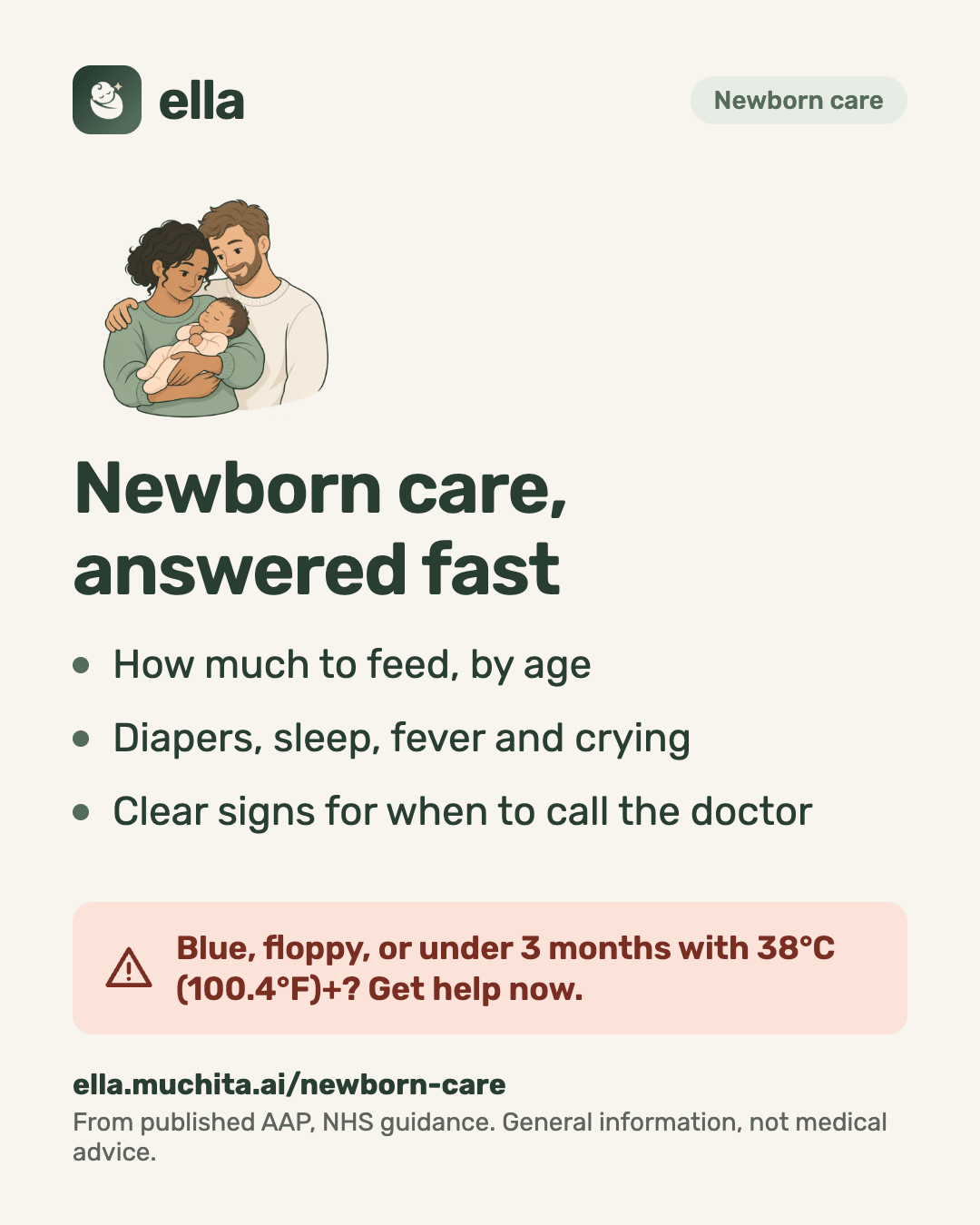
Share the newborn care guide
Send it to your partner, family or anyone who helps
The image has the key facts and a link back to this page. Nothing you entered on this page is shared.
The first weeks with a newborn are full of small questions that feel big at 3 a.m. Is this much milk enough? Is green poop normal? When is a temperature a reason to call? Each guide here answers one question in plain words, starting with the short answer, then the guidance at a glance, easy to use with one hand, and clear signs for when to call the doctor or get help now. Each guide is written from guidance by the American Academy of Pediatrics, the World Health Organization, the NHS, NICE and the CDC, and lists the sources it uses.
Sources
- NHS: Sepsis (symptoms in babies and children)
- NHS: High temperature (fever) in children
- AAP, HealthyChildren.org: Fever and your baby
- NICE guideline NG143: Fever in under 5s
- AAP, HealthyChildren.org: Common conditions in newborns
- AAP Committee on Fetus and Newborn: Apnea of prematurity (Pediatrics, 2016)
- NHS: What to do if your child has an accident
- Resuscitation Council UK: Paediatric Life Support 2025
- AAP/Schmitt: Newborn Reflexes and Behavior
- NHS: Soothing a crying baby
- AAP, HealthyChildren.org: Vomiting in infants
- NHS: Newborn jaundice
- AAP, HealthyChildren.org: Jaundice in newborns
- NHS: How to resuscitate a child
- NHS: How to stop a child from choking
- NHS: When to get urgent medical help for babies and children under 5
- NHS: Colic
- NHS: Meningitis
- NHS: Diarrhoea and vomiting
How we write these guides
Answer first
The answer is at the top. The detail is there when you want it.
Built on official guidance
Every guide is built on published guidance from health bodies such as the AAP, NHS, NICE, CDC and WHO, plus a few clearly cited studies, and each recommendation links to its source. Where sources differ, we show both, or the more cautious advice; where we choose otherwise, the page says so and why. These organisations have not reviewed our guides, and we are not affiliated with or endorsed by them.
Clear about when to call
Each guide sorts warning signs by what to do: call your local emergency number now, get medical advice now, call your doctor today, or mention it at your next check-up.
Free, with no ads
No third-party ads and no sponsored products. The guides are free to read, from the team that makes Ella, a shared baby journal.
Open about how we work
Muchita AI writes these guides with AI help that reads, summarises and translates the published guidance. No doctor signs them off, so we keep to what the sources say and link each recommendation to its source. AI can still make mistakes: if you spot one, tell us and we will correct it.
Ella
Ella remembers, so you don't have to
On Android, log feeds, diapers and sleep from your home screen in one tap. Everyone who looks after your baby sees the same journal, live, on their own phone.
