ella by Muchita
Choose language: EnglishEnglishEN
Newborn care Start free

Skin and body · first 3 weeks

Umbilical cord stump care

Checked against current guidance on October 8, 2026. General information, not medical advice.
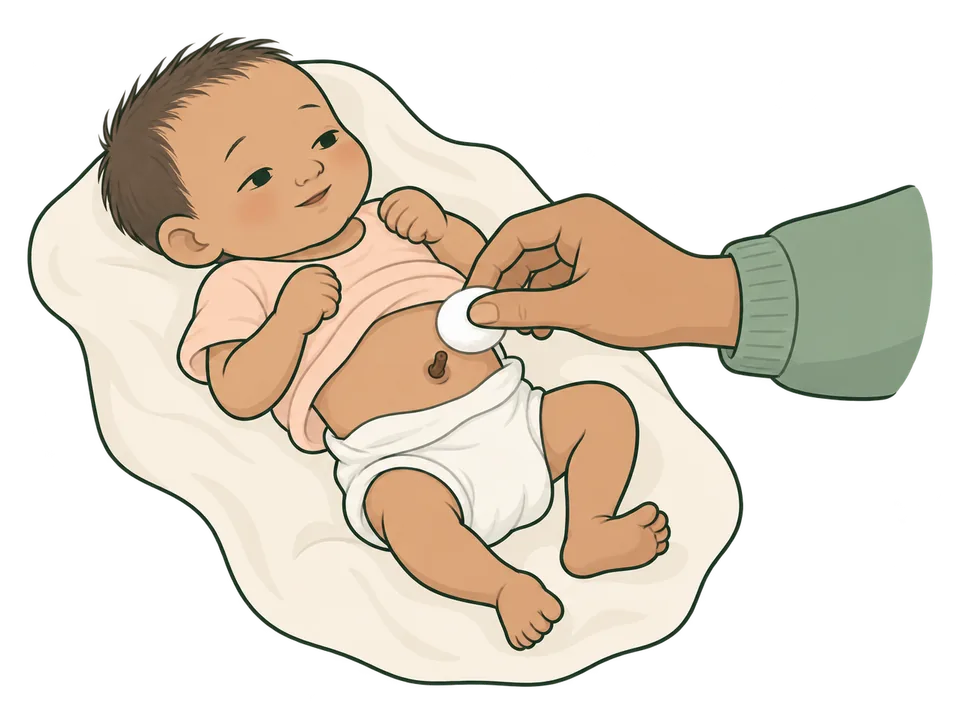
Illustration of a newborn with the diaper folded below the cord stump.

The 10-second answer

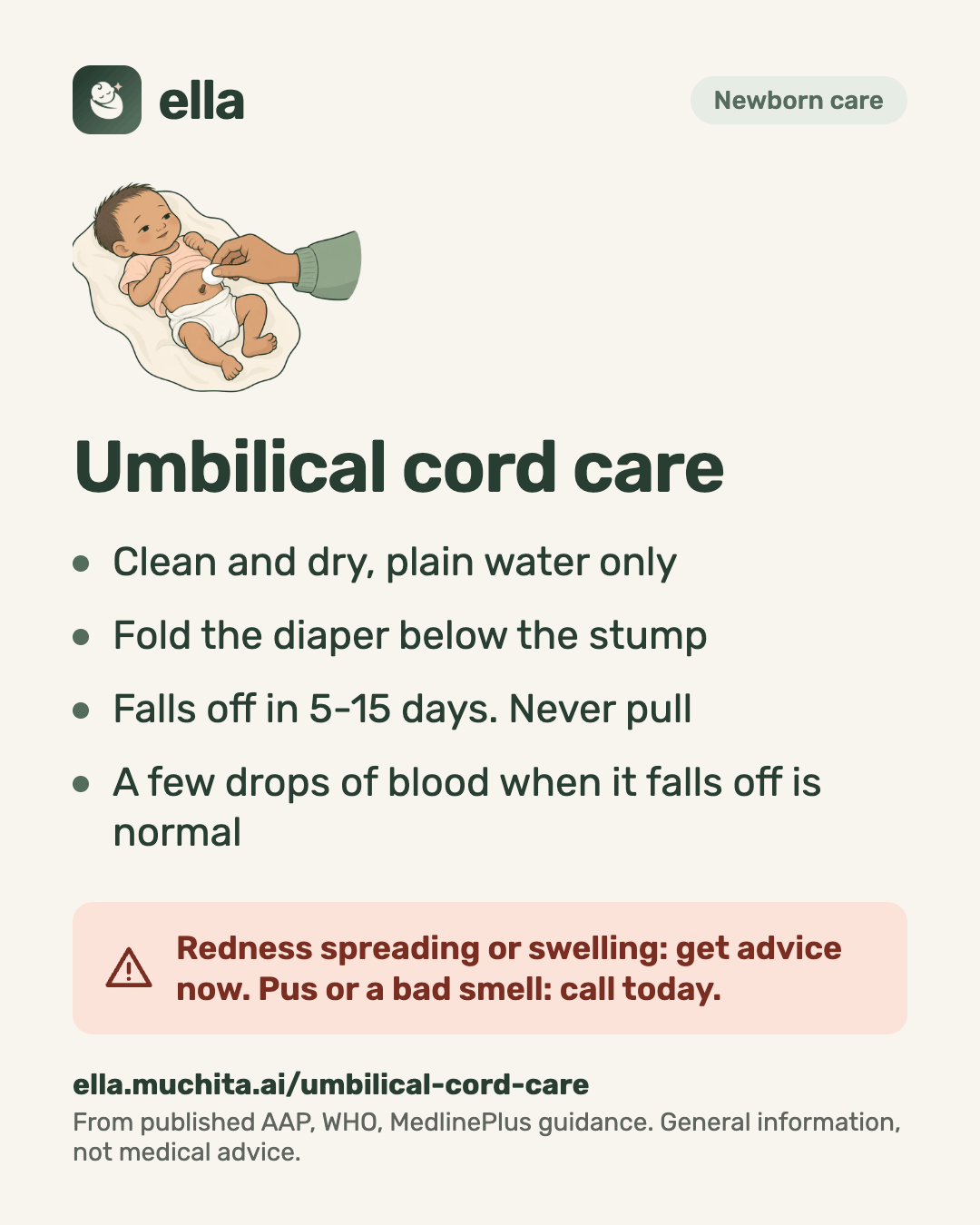
  • Keep it clean and dry. Use plain water if it gets dirty, then pat dry. No alcohol needed.12347
  • Fold the top of the diaper below the stump so it gets air.14
  • It usually falls off by itself in 5-15 days. Never pull it.34
  • Redness spreading onto the tummy or swelling: get medical advice now. Pus or a bad smell: call your doctor today.134

General information from published guidance, not a diagnosis or medical advice for your baby. If you are worried, call your doctor, midwife or local health line, whatever this page says. In an emergency, call your local emergency number.

What's normal right now

Choose by birthday
How it looks
Yellow-green and shiny, then drier and darker
What to do
Keep it dry and open to the air. Sponge bath if your doctor suggests it.

Check the base of the stump once a day.148

How it looks
Dry, brown or black, shriveled
What to do
Let it fall off by itself, even if it hangs by a thread.

A few drops of blood or a little sticky ooze when it comes off is normal.134

How it looks
A small raw or moist spot
What to do
Keep it clean and dry. It heals in about 7-10 days.

A pink, moist lump that doesn't heal may be a granuloma: easy for a doctor to treat.134

How it looks
Dry stump still there
What to do
Mention it to your doctor.

Usually just slow, but worth a check.14

Is this normal?

Common signs, and what the guidance says to do

Usually normal

A few drops of blood are common when the stump comes off. Press gently with clean gauze for a few minutes.14

Usually normal

Common as it separates. Clean with water and pat dry.4

Guidance: get medical advice now

This can be an infection, which can spread fast in newborns. Get medical advice now.134

Guidance: get medical advice now

Possible infection. Get medical advice now, especially with fever or a sleepy baby.349

Guidance: call your doctor today

Possible infection. Call your doctor today. If there's also redness spreading onto the skin, get medical advice now.134

Guidance: get medical advice now

Get medical help now.4

Guidance: call your doctor today

A small, moist pink lump can be an umbilical granuloma. It is usually harmless and easy to treat: call your doctor.134

Watch and log it

A soft bulge like this can be an umbilical hernia: common, and it usually closes by itself, often by age 2 and almost always by age 5. Mention it at your next check-up. Get help now if it becomes hard, discolored or painful.16

Save the day it fell off as a milestone in Ella. Open Ella

Get medical help now if

  • redness or hardness spreading around the belly button134
  • your baby has a fever of 38°C or more, or is very sleepy or not feeding349
  • bleeding that doesn't stop after 10 minutes of gentle pressure4

Call your doctor or midwife today if

  • yellow pus or a bad smell from the stump134
  • a moist pink lump that doesn't heal after the cord falls off134
  • the stump is still attached after 3 weeks1

If your baby stops breathing, turns blue or grey, is floppy or cannot be woken, call your local emergency number now.

The details

Dry cord care is enough

Research shows that where hygiene is good, keeping the cord clean and dry works as well as alcohol or other antiseptics, and it may fall off sooner. In some countries, especially where newborn infections are more common or where substances are traditionally put on the cord, a health worker may recommend an antiseptic such as chlorhexidine. Follow local advice.

1245

Daily routine
  1. Wash your hands.
  2. If the stump is dirty, clean it with a cotton pad and plain water.
  3. Pat dry with a clean cloth.
  4. Fold the diaper below the stump, or use newborn diapers with a cutout.
  5. Dress your baby in loose clothes so air can reach it.

1347

Bathing before it falls off

Many doctors suggest sponge baths until the stump falls off. If you do give a tub bath, keep it short and pat the stump dry afterwards. Our bath guide walks you through it.

3478

A bulge at the belly button

A soft bulge that gets bigger when your baby cries is usually an umbilical hernia. It is common and usually closes by itself, most often by age 5.

16

Questions parents ask

When does the umbilical cord fall off?

Usually between 5 and 15 days after birth. Some take up to 3 weeks. If it is still attached after 3 weeks, mention it to your doctor.134

Should I clean the umbilical cord with alcohol?

Not usually. Keeping it clean and dry with plain water is the current advice in most countries. Follow your midwife's advice if they recommend an antiseptic.1245

Is it normal for the umbilical cord to smell?

A bad smell, especially with yellow discharge, redness or swelling, can mean infection: call your doctor. If redness is spreading onto the tummy, get medical advice now.134

What if the cord bleeds?

A few drops when it falls off are normal. Press with clean gauze. Bleeding that doesn't stop after 10 minutes of gentle pressure needs medical help.14

Ella

Small firsts, saved

Add the day the cord fell off to your baby's milestones, and log baths and feeds with one tap. Your whole family sees the same journal.

Sources

  1. AAP, HealthyChildren.org: Umbilical cord care
  2. WHO recommendations on maternal and newborn care for a positive postnatal experience (2022)
  3. MedlinePlus (NIH National Library of Medicine): Umbilical cord care in newborns
  4. Seattle Children's Hospital (Schmitt Pediatric Guidelines): Umbilical cord symptoms
  5. Cochrane Database of Systematic Reviews: Umbilical cord antiseptics for preventing sepsis and death among newborns (Imdad A et al., 2013)
  6. NHS: Umbilical hernia
  7. NHS: How to bathe your baby
  8. AAP, HealthyChildren.org: Bathing your newborn
  9. NHS: When to get urgent medical help for babies and children under 5

Guidance can differ between countries. Where it does, we show both. Follow your own doctor or health service.

Checked against current guidance on October 8, 2026. General information, not medical advice. Written by the Ella team at Muchita AI from published guidance by the AAP, NHS, NICE, WHO and CDC, with AI-assisted drafting and translation checked against those sources by our team. These organisations have not reviewed or endorsed this page. General information, not a diagnosis or medical advice. If you are worried about your baby, trust your instinct and call a doctor.

How we write these guides · Report an error

When to call