Everyday care · first months
How to bathe a newborn
Checked against current guidance on October 8, 2026. General information, not medical advice.
The 10-second answer
- 2-3 baths a week is plenty. Wipe the face, neck folds and diaper area every day.123
- Water at about 36-38°C: it should feel warm, not hot, on your wrist or elbow.1234
- About 5-8 cm of water. Never leave your baby alone in water, not even for a second, and don't rely on a bath seat.1235
- Until the cord stump falls off, a sponge bath is often easiest.1
General information from published guidance, not a diagnosis or medical advice for your baby. If you are worried, call your doctor, midwife or local health line, whatever this page says. In an emergency, call your local emergency number.
Bath-ready checklist
Tick as you go. Everything within reach before the baby goes in.
Bath, step by step
- Step 1 of 7
Get everything ready
Warm the room. Put a towel, clean diaper, clothes and cotton pads within reach before you start. Plain water is all a newborn needs.23
 Step 2 of 7
Fill the bath
Cold water first, then hot, and mix well. Aim for 36-38°C. Your elbow should feel warm, not hot. About 5-8 cm deep is enough.1234
- Step 3 of 7
Face first
Before undressing, wipe each eye from the inner corner outward with a fresh pad dipped in plain water. Then the face, behind the ears and the neck folds.2
- Step 4 of 7
Hair
Wrap your baby in a towel, hold them along your forearm over the bath, and wet the hair with your hand. Pat dry.23
 Step 5 of 7
Into the water
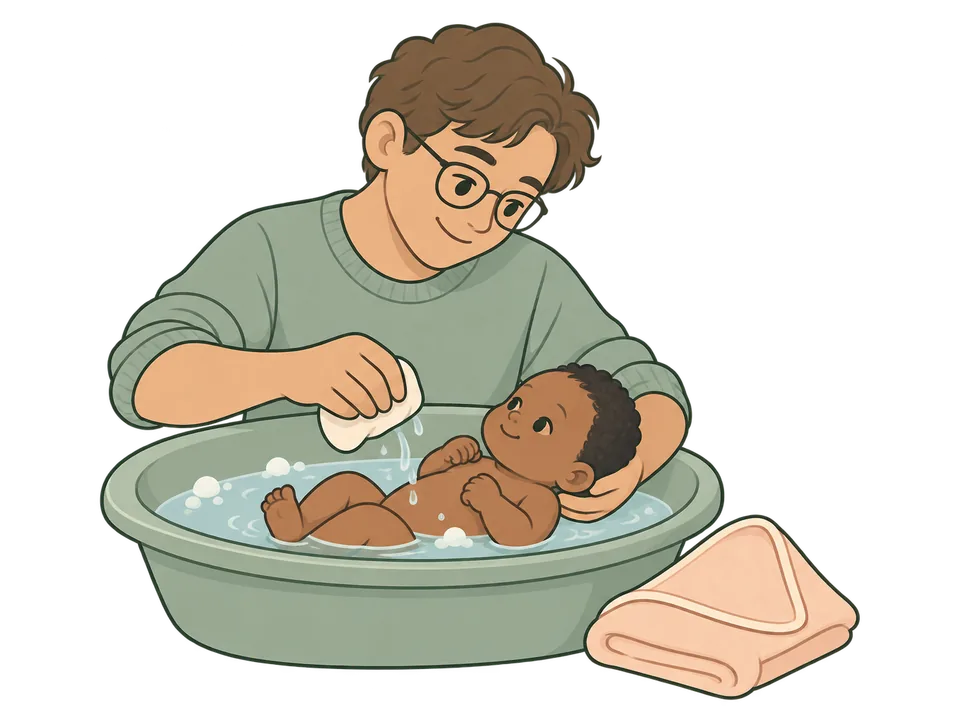
Undress your baby and wipe off any poop. Lower them in feet first, supporting the head and neck on your forearm and holding the far upper arm.123
- Step 6 of 7
Wash gently
Keep your baby's shoulders warm with water poured over them. Wash from top to bottom, through the creases, with the diaper area last. Keep the first baths short.1
- Step 7 of 7
Out and dry
Lift your baby onto the towel, wrap them up and pat dry, especially in the creases. Diaper and dress quickly so they stay warm.123
Log bath time in Ella so the whole family knows when it was. Open Ella
If your baby stops breathing, turns blue or grey, is floppy or cannot be woken, call your local emergency number now.
The details
Safety rules that matter
- Never leave your baby alone in or near water, even for a second. Babies can drown in 2.5 cm of water.
- Keep one hand on your baby the whole time.
- Check the temperature every time. Set your hot water heater to 49°C or lower if you can.
- Bath seats and rings are not safety devices.
- Run cold water through the tap last so it isn't hot to the touch.
Sponge bath, step by step
Lay your baby on a towel in a warm room, wrapped in a second towel. Uncover one part at a time, wipe it with a soft cloth dipped in warm water, pat dry and cover again. Do the diaper area last.
Skin care in the first month
Bath time as a bedtime cue
From a few weeks, a short warm bath can become part of a calming evening routine: bath, feed, a quiet cuddle and bed.
Nails
Newborn nails can be long and sharp, and babies can scratch themselves. File them with a fine emery board, or trim them with baby nail clippers or small round-ended baby scissors, ideally while your baby is asleep or relaxed.
Questions parents ask
How often should you bathe a newborn?
2-3 times a week is enough. More often can dry the skin. Clean the face, neck folds, hands and diaper area daily.123
Can I bathe my baby before the umbilical cord falls off?
Many doctors suggest sponge baths until it does. If you give a tub bath, keep it short and pat the stump dry afterwards.12
What is the right bath water temperature for a baby?
About 36-38°C. It should feel comfortably warm on your elbow or the inside of your wrist.1234