For parents · first year
Baby blues or postpartum depression?
Checked against current guidance on October 8, 2026. General information, not medical advice.
Where to get help now
If you have thoughts of harming yourself or your baby, call your local emergency number now. In the US, call or text 988 or call 1-833-852-6262. In the UK and Ireland, call Samaritans on 116 123. Elsewhere, find a free helpline at findahelpline.com.13111213
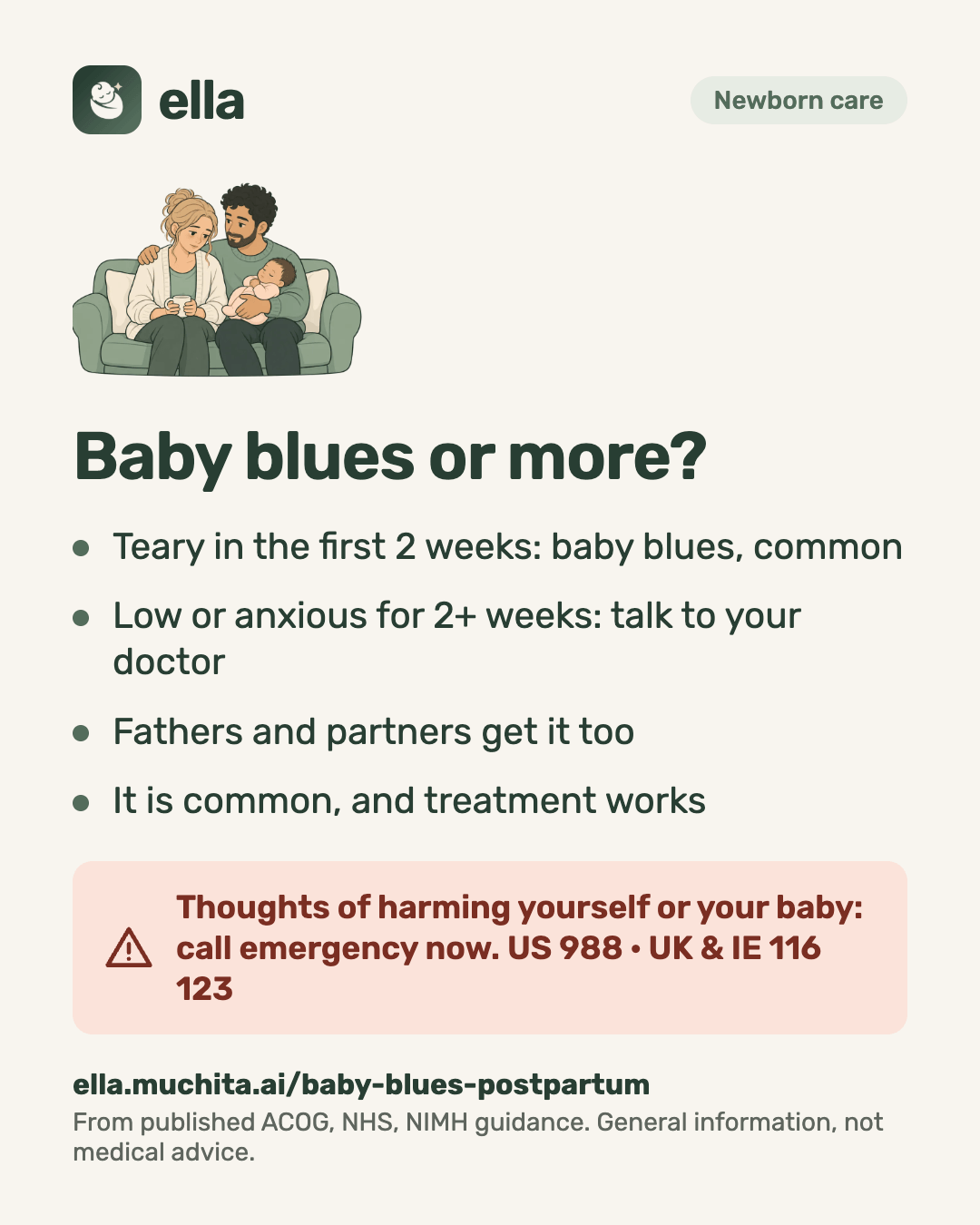
The 10-second answer
- Feeling tearful, anxious or up and down in the first 2 weeks is common: these are the baby blues.1234
- If low mood, anxiety or a loss of joy lasts more than 2 weeks, or starts later, it may be postpartum depression. It is common and treatable.235
- Fathers and partners can get it too.2610
- Thoughts of harming yourself or your baby are an emergency: call your local emergency number now.123
General information from published guidance, not a diagnosis or medical advice. If you are worried about how you feel, talk to your doctor, midwife or a helpline. In an emergency, call your local emergency number.
Signs to look out for, and what to do
Common signs, and what the guidance says to do
Usually normal
Feeling teary and up and down in the first 2 weeks is typical of the baby blues, which usually pass by themselves. Rest when you can, accept help, and talk about how you feel.124
Guidance: get medical help today
Feeling this way for more than 2 weeks is a common sign of postpartum depression. Contact your doctor, midwife or nurse today: don't wait for your next check-up. Treatment works, and the sooner, the better.123
Guidance: get medical help today
Anxiety after birth is as common as depression, and very treatable. Contact your doctor or midwife today.49
Guidance: get medical help today
This can be a sign of postpartum depression. Please contact your doctor or midwife today.23
Guidance: get medical help today
Unwanted, upsetting thoughts are common in new parents and don't mean you will act on them, but you deserve support. Tell your doctor or midwife today. If the thoughts start to feel right or real, or you feel you might act on them, call your local emergency number now.8937
Guidance: call emergency services now
This can be postpartum psychosis, a rare medical emergency that can get worse quickly. Call your local emergency number or go to an emergency department now, and have another adult stay with you and your baby.37
Guidance: call emergency services now
Call your local emergency number now, or go to an emergency department. You can also talk to someone right now: in the US, call or text 988, or call the National Maternal Mental Health Hotline at 1-833-852-6262; in the UK and Ireland, call Samaritans free on 116 123; in Canada, call or text 988; in Australia, call Lifeline on 13 11 14. Elsewhere, find a free helpline at findahelpline.com. You are not alone, and help works.131112131415
Small things that help
- Step 1 of 5
Share the nights
Take turns with your partner or a helper so each of you gets one longer stretch of sleep.6
- Step 2 of 5
Say yes to help
Let people bring food, hold the baby while you shower, or take a walk with the stroller.246
- Step 3 of 5
Get outside
A short walk each day can help your mood, even a few minutes with the stroller.2
- Step 4 of 5
Talk to someone
A partner, a friend, a parent group or a helpline. Talking about how you feel really does help.2
- Step 5 of 5
Tell a professional
Your doctor, midwife or nurse asks about mood at check-ups for a reason. Be honest: they can help.124
Share the journal so others can take over feeds without asking you. Open Ella
The details
Baby blues vs. postpartum depression
Treatment works
Questions parents ask
How long do baby blues last?
Usually up to 2 weeks after birth. If feelings last longer or get stronger, talk to your doctor or midwife.123
Can fathers get postpartum depression?
Yes. Up to 1 in 10 fathers have depression after a baby is born. The same help works.2610