Health · 0-12 months
Stuffy nose and colds in babies
Checked against current guidance on October 8, 2026. General information, not medical advice.

The 10-second answer
General information from published guidance, not a diagnosis or medical advice for your baby. If you are worried, call your doctor, midwife or local health line, whatever this page says. In an emergency, call your local emergency number.
What are you noticing?
Common signs, and what the guidance says to do
Usually normal
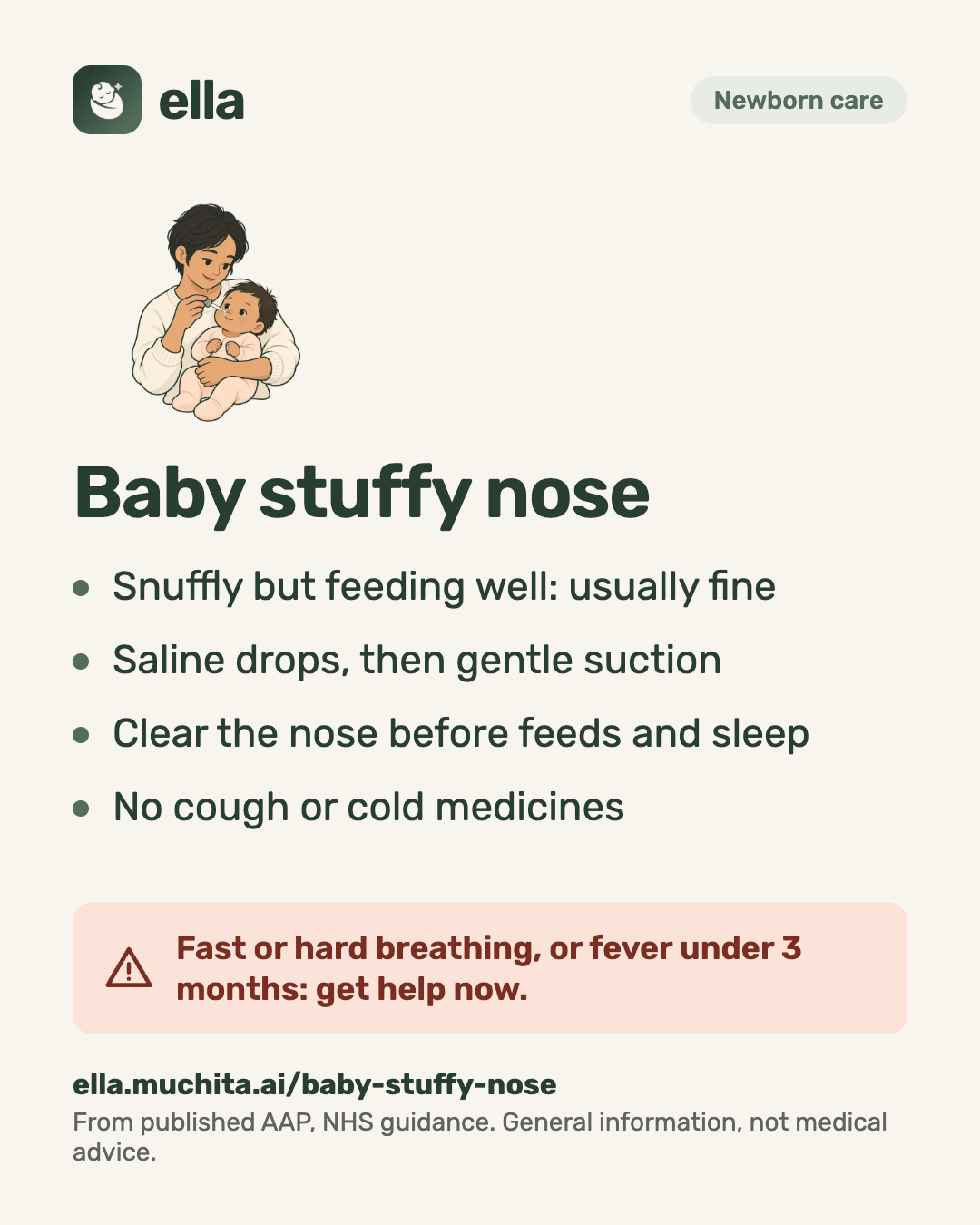
Very common in newborns: their noses are tiny. Saline drops help. No treatment needed if your baby feeds and sleeps well.42
Watch and log it
Use saline drops and gentle suction just before feeds. Call your doctor if your baby is taking much less than usual.253
Guidance: call your doctor today
Under 3 months, call your doctor today at the first sign of a cold, even if your baby seems well: colds can get worse quickly at this age. Older babies: colds usually last 7-10 days. Keep up feeds, use saline, watch breathing, and call if it lasts more than 10 days or gets worse.123
Guidance: call emergency services now
A fever at this age always needs checking straight away: call your local emergency number or go to an emergency department. If your baby otherwise seems well, you can call your doctor's urgent line right away instead (in the UK, 111).13
Guidance: call emergency services now
Your baby is working hard to breathe. Call your local emergency number or go to an emergency department now.1345
Guidance: get medical advice now
Your baby may be getting dehydrated. Get medical advice now.3
Clear a blocked nose
- Step 1 of 5
Saline drops
Lay your baby on their back and put 2 drops of saline (salt water) in each nostril.52
- Step 2 of 5
Wait a moment
Wait a moment for the saline to loosen the mucus. Your baby may sneeze, which helps.5
- Step 3 of 5
Gentle suction
Squeeze the bulb first, then place the tip gently just inside the nostril and release slowly. A nasal aspirator works too.5
- Step 4 of 5
Before feeds and sleep
Clear the nose about 15 minutes before feeds and sleep, when the stuffiness is bothering your baby.52
- Step 5 of 5
Keep them upright to feed
Hold your baby more upright for feeds, offer smaller, more frequent feeds, and keep them on their back for sleep.35
Log feeds and wet diapers in Ella to see if your baby is taking less than usual. Open Ella
If your baby stops breathing, turns blue or grey, is floppy or cannot be woken, call your local emergency number now.
The details
Why babies sound so snuffly
Newborns have small, narrow airways, so a little mucus or milk makes a lot of noise. When a newborn's breathing sounds unusual, the most common reason is a blocked nose, not a cold.
No cough and cold medicines
Over-the-counter cough and cold medicines aren't safe or effective for babies and young children. Don't give honey before age 1, and don't use vapor rubs on babies. Saline, suction, feeds and rest are what help. Ask your doctor before giving anything for a fever.
Bronchiolitis and RSV
Questions parents ask
How can I clear my newborn's stuffy nose?
Put 2 saline drops in each nostril, wait a moment, then gently use a bulb syringe or aspirator, especially before feeds and sleep.25
Is it normal for a newborn to sound congested?
Yes, often. If your baby is feeding well, breathing comfortably and has no fever, a snuffly nose is usually nothing to worry about.42
Can I give my baby cold medicine?
No. Cough and cold medicines aren't recommended for babies. Use saline and suction, and talk to your doctor.2
Should my baby sleep propped up with a cold?
No. Babies should always sleep flat on their back, even with a cold.5