Skin and body · first 3 weeks
Newborn jaundice: normal or not?
Checked against current guidance on October 8, 2026. General information, not medical advice.

The 10-second answer
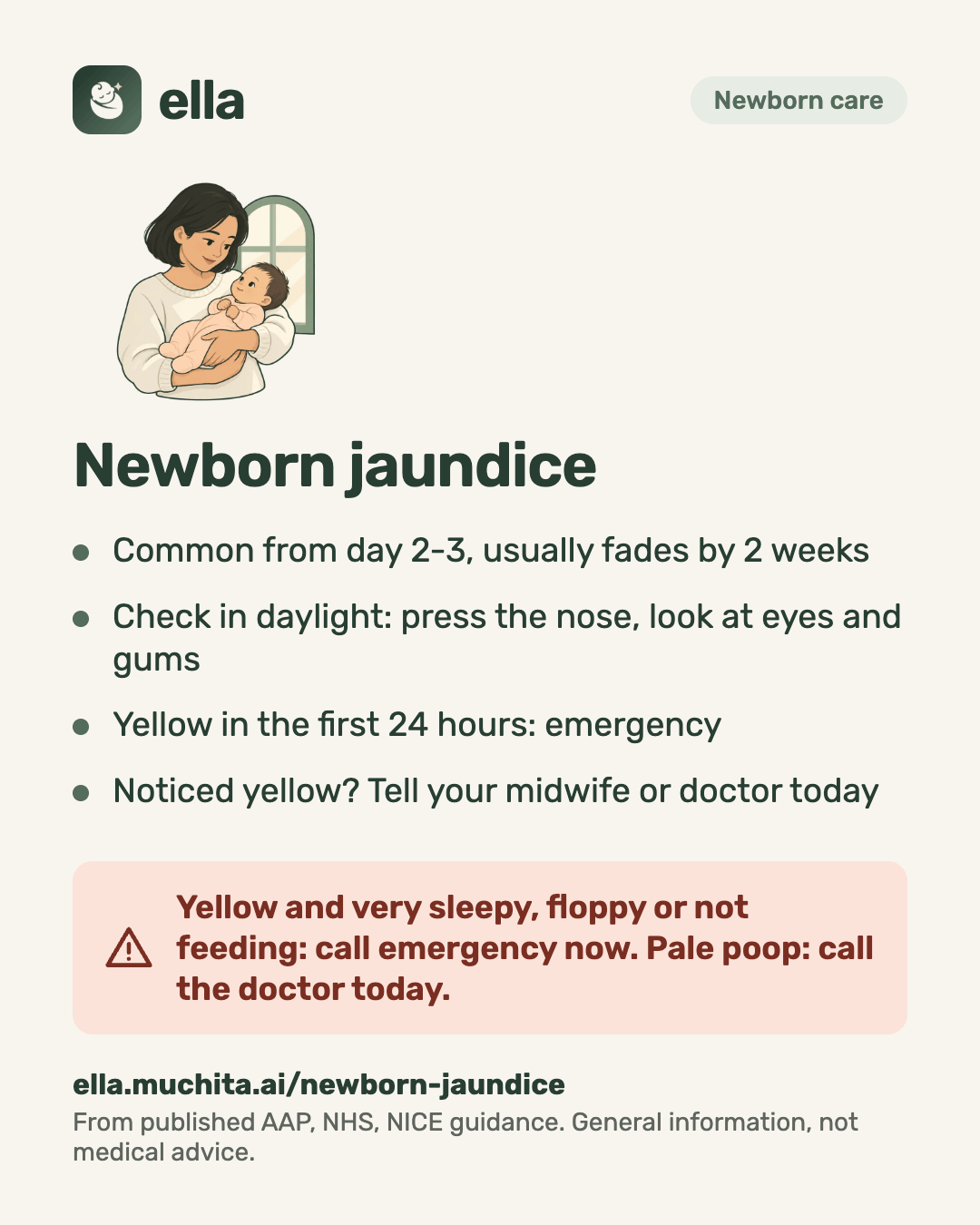
- Jaundice is common (about 6 in 10 newborns), usually from day 2-3. If you notice yellow skin or eyes, tell your midwife or doctor the same day: only a test shows the level.134
- Yellow skin or eyes in the first 24 hours is not normal: call your local emergency number or go to an emergency department now.1234
- It usually peaks around days 3-5 and fades within 2 weeks, or 3 weeks in premature babies.234
- Yellow and very sleepy, floppy, not feeding, or no wet diapers: call your local emergency number now. Pale poop or dark urine: call your doctor today.13
General information from published guidance, not a diagnosis or medical advice for your baby. If you are worried, call your doctor, midwife or local health line, whatever this page says. In an emergency, call your local emergency number.
What is expected today
Choose by birthday
Guidance: call emergency services now
- Is yellowing expected?
- No
- What to do
- Any yellowing now needs urgent care: call your local emergency number or go to an emergency department.
Early jaundice can rise quickly and is checked with a blood or skin test.1234
Guidance: call your doctor today
- Is yellowing expected?
- Common, but get it checked
- What to do
- Tell your midwife or doctor today, as soon as you notice it (in the UK, ask for an urgent GP or midwife appointment, or call 111), so they can check the level with a skin or blood test. Feed 8-12 times a day.
Frequent feeds help clear bilirubin through poop. Most babies need no treatment.1234
Guidance: call your doctor today
- Is yellowing expected?
- Should be at or past its peak
- What to do
- If the yellow is new or spreading, tell your midwife or doctor the same day. Very sleepy or not feeding: call your local emergency number.
Call your doctor if the yellow is spreading to the tummy, arms or legs.13
Watch and log it
- Is yellowing expected?
- Fading
- What to do
- It should be getting lighter each day. If it isn't fading, is spreading, or you are only noticing it now, tell your midwife or doctor today (in the UK, ask for an urgent GP or midwife appointment, or call 111).
Breastfed babies sometimes stay a little yellow longer while otherwise thriving.134
How to check
- Step 1 of 4
Use daylight
Undress your baby and look in bright daylight near a window, or under bright white light.14
- Step 2 of 4
Press and release
Gently press a fingertip on the nose or forehead for a second. On jaundiced skin the pressed spot looks yellow before the color returns.34
- Step 3 of 4
On darker skin
Look at the whites of the eyes, the gums, and under the tongue or inside the cheeks.34
- Step 4 of 4
Check how far it goes
Jaundice spreads from the head downwards. Yellow reaching the tummy, arms or legs means a higher level: call your doctor today. Checking by eye can miss jaundice. If you are unsure, ask for a skin or blood test.124
Ella counts feeds and diapers, the first things a nurse asks about. Open Ella
If your baby stops breathing, turns blue or grey, is floppy or cannot be woken, call your local emergency number now.
The details
Why newborns get jaundice
Feeding helps
Treatment, if it is needed
Don't use sunlight
Pale poop and dark urine
Jaundice with pale, white or chalky poop, or dark urine that stains the diaper, can be a sign of a liver problem. Call your doctor the same day. Our diaper guide has a poop color check.
Questions parents ask
How long does newborn jaundice last?
Usually 1-2 weeks. It can last up to 3 weeks in premature babies, and a little longer in some breastfed babies. Jaundice after 2 weeks (3 weeks if premature) should be checked by a doctor.134
Does breastfeeding cause jaundice?
Breastfed babies can stay slightly yellow for longer. This is usually harmless, and stopping breastfeeding is rarely needed. Talk to your doctor before changing anything.124
Is newborn jaundice dangerous?
Usually not. But very high bilirubin levels can damage the brain if left untreated, which is why jaundice in the first 24 hours, spreading yellow, or a very sleepy baby needs prompt testing.124
How do doctors test for jaundice?
With a painless light meter on the skin, or a small blood test from the heel.3